The directors
One team. One standard.
Land, design, construction, electrical and operations sit inside one company. Each of them answers to a director who has done the work himself. This is who they are, what each one holds, and the standards they hold it to.
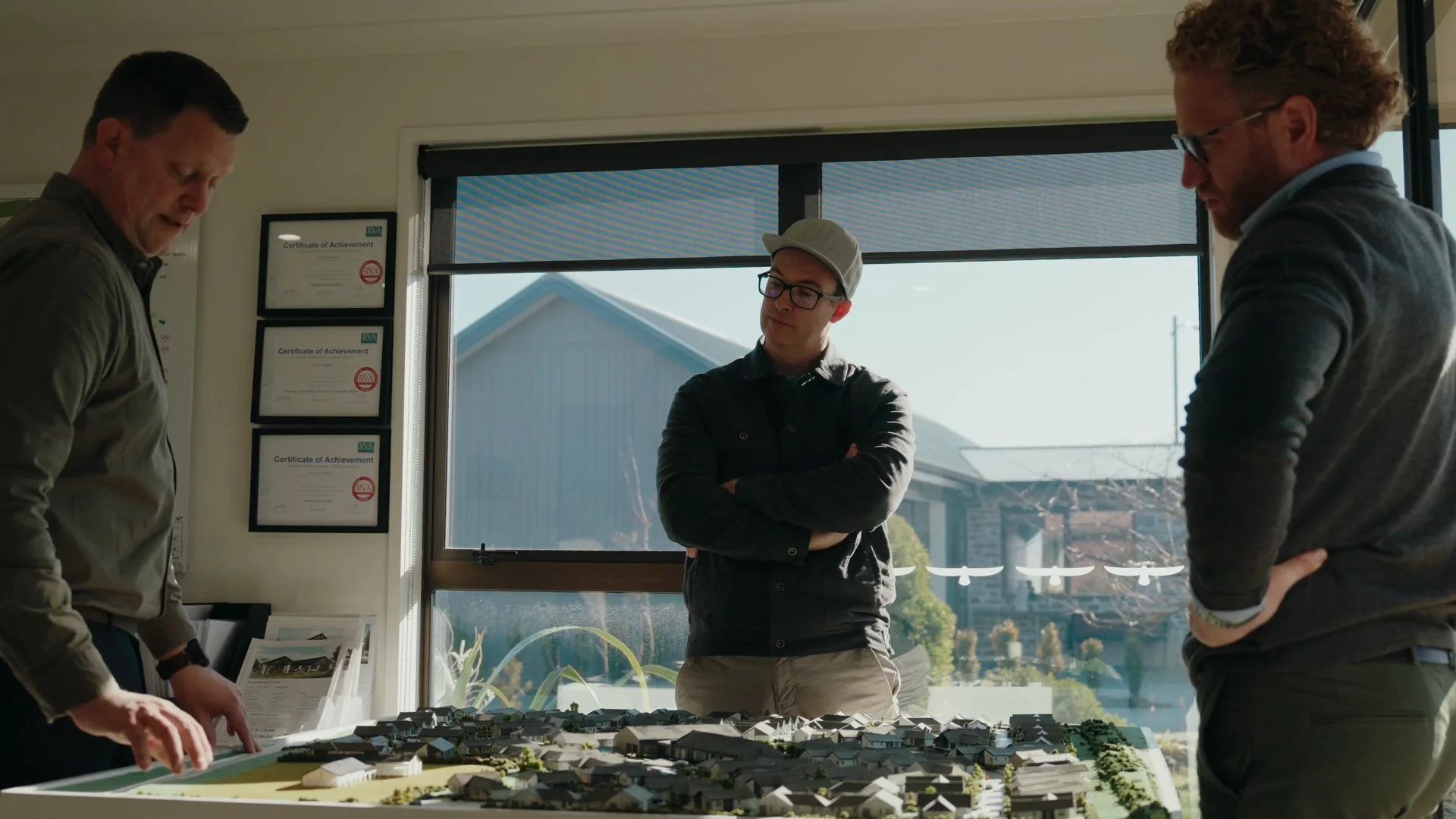
…when you're using individual firms, they're all concerned with their own margin, whereas we're concerned with the outcome.
Simon Kelsall, Design Director
01
Land and capital
Gareth Newton
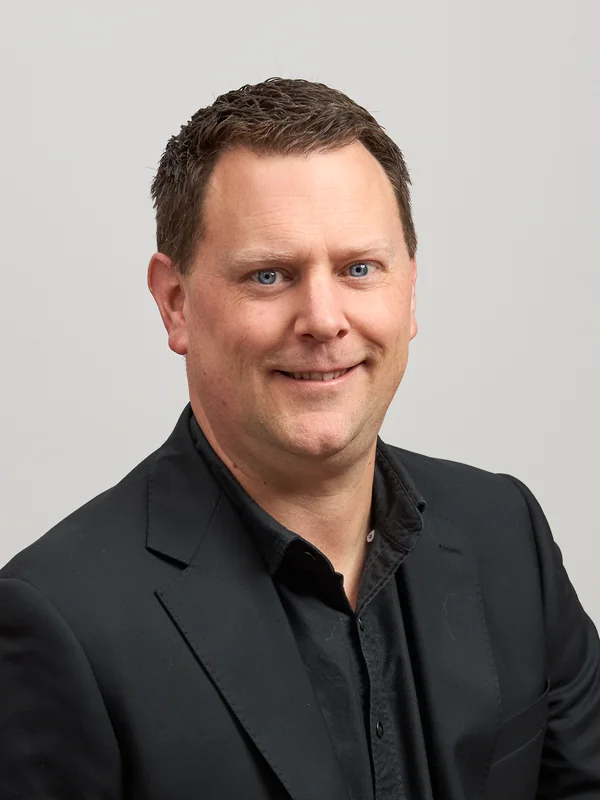
Gareth Newton is Chief Executive of HPA Group. His part in a village starts well before there is a village. Once a site has been identified and the owner found, he goes and walks it, meets whoever holds the title, and listens to what they know about the place. Land that has been in one family for a long time carries things a feasibility study will not turn up, and some of it ends up in the village.
Before any of that, there are fundamentals that have to be there: demand in the area, soils that engineer properly, and not too much slope, because slope becomes an accessibility problem for the people who will live on it. If those boxes are not ticked, HPA does not pursue the site. The feasibility study behind that decision is produced in-house.
He came into the sector through electrical engineering, and he came into it on site rather than from an office, spending his early years in daily conversation with residents about what made a place feel safe to them. He reads that as the origin of how the business is run now. On an HPA site the people building and the people documenting are not two separate operations, and keeping it that way is a daily job rather than a policy.
The direction he sets for the company is succession. Nearly thirty years of history, and the intention to keep it intact for the next thirty, in villages none of the current directors will see finished.
There's a lot more soul in what we do than just straight engineering.
Gareth Newton, Chief Executive
02
Design
Simon Kelsall
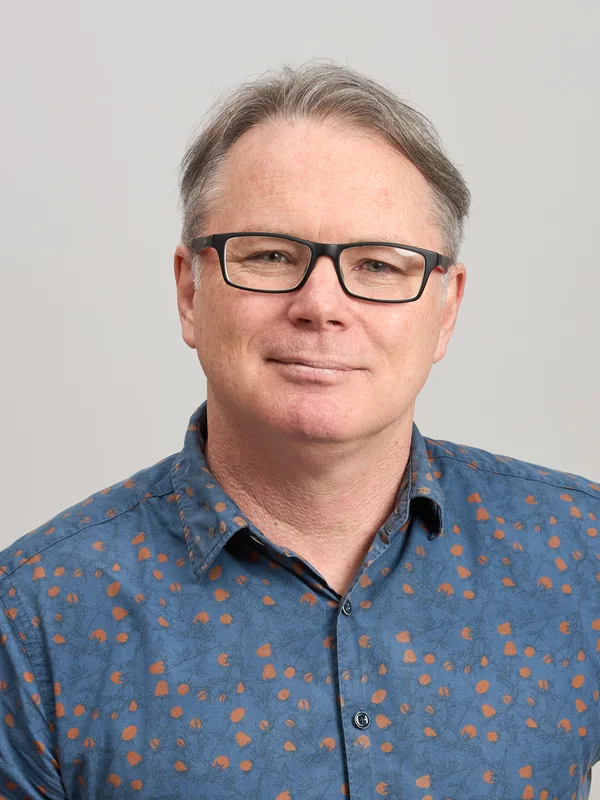
Design Director
Auckland
- EmailTo come
- LinkedInTo come
Simon Kelsall has master planned HPA villages for twenty years. He went to architecture school, worked, travelled, spent time at an architecture firm in London doing high-end residential, and came back to New Zealand to get registered. He describes what he does now as modest architecture: good houses, well designed, for people on ordinary incomes. He gets to build a hundred of them a year instead of one.
Master planning means taking bare land and finding a village in it, in stages, across six to eight years of continuous construction. He holds that no two sites can be worked the same way, because every site, every town and every client base is different, and that the moment the work becomes copy and paste it has already failed. The plan has to be able to flex, because the market a village was designed for will shift under it before the last stage is built. Rigid plans cannot meet a market that has moved.
He also holds that the job is not only lifestyle, and that there has to be an undercurrent of care beneath it. The reason he gives for HPA doing feasibility, design and construction under one roof is not that it is tidier. It is that everyone in the room is arguing about the same outcome instead of defending a margin, and that on a project this long you cannot afford anything else.
Early on, he was touring a building another operator had just finished, in Tauranga, on an ordinary Tuesday. The residents started arriving and he assumed a function was about to begin. They had a cup of tea, talked for twenty minutes, and went home.
…No, that wasn't an event. That was just the community getting together for a cup of coffee. And I went, oh, I see what this is actually about. This is companionship.
Simon Kelsall, Design Director
03
Build
Hamish Ward

…you spend your whole life getting put into a box. Why would you want to retire into one?
Hamish Ward, Construction Operations
Hamish Ward spent his teens and early twenties in the New Zealand Army and left after the Christchurch earthquakes to rebuild his home city. He started as a labourer on an earthquake repair at the University of Canterbury, signed up to an apprenticeship the same day, and spent the years from twenty-two to twenty-six either building, learning to build, or at Polytech in the evenings studying construction management and quantity surveying. He won the New Zealand Apprentice of the Year competition along the way.
Ten years followed at a commercial construction company, moving through every role in it, from apprentice to site manager, with months at a time spent inside estimating, quantity surveying, health and safety and accounts. The systems the construction arm of HPA now runs to nationwide are the ones he built.
He plans every construction operation, sets the hold points the site stops at, and owns the quality system behind the build programme. Every hour that goes into a development is recorded. When a process is not working, unpicking it is his job, on the argument that an inefficient site is the thing that most annoys the people working on it, and that doing it properly is what makes a quoted price hold. He still spends an hour or two most weeks going back through a set of plans looking for a better way to do it.
04
Systems
Regan Sim
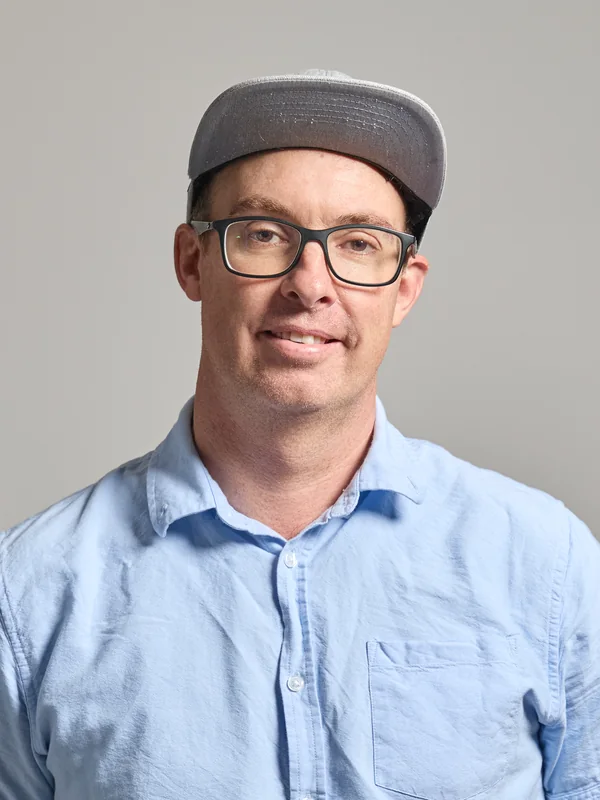
Electrical Director
Clyde
- EmailTo come
- LinkedInTo come
Regan Sim grew up in Central Otago, did his electrical apprenticeship in Queenstown, and then spent years in Australia on mine sites and gas plants, where he learnt to run people as well as jobs. He came home, worked in an HPA village as an electrical contractor, started his own business off the back of it, and eventually came in as a director. The villages he builds now are in the area he grew up in.
A village runs on its own embedded network, and his teams put it in: the high voltage supply first, then street lighting, villa cabling, data and television, so that no house needs its own dish. He specifies heat recovery ventilation in every villa, so the homes stay warm and do not smell shut up. His people also stay after handover, including at a village HPA did not build, where someone is on site most days because HPA installed the systems and knows them.
On the day a resident moves in, the internet is already on and the television goes on the wall. He is candid that this is a small thing and does it anyway, because it is the first night in a new home. He brought his own apprentices through their apprenticeships, and he is still on the ground with them when the job needs it.
There's no blame, there's no, like, risk of these big variations, you know, because you're just working together for the same outcome, essentially.
Regan Sim, Electrical Director
05
The long view
Lee Eagle
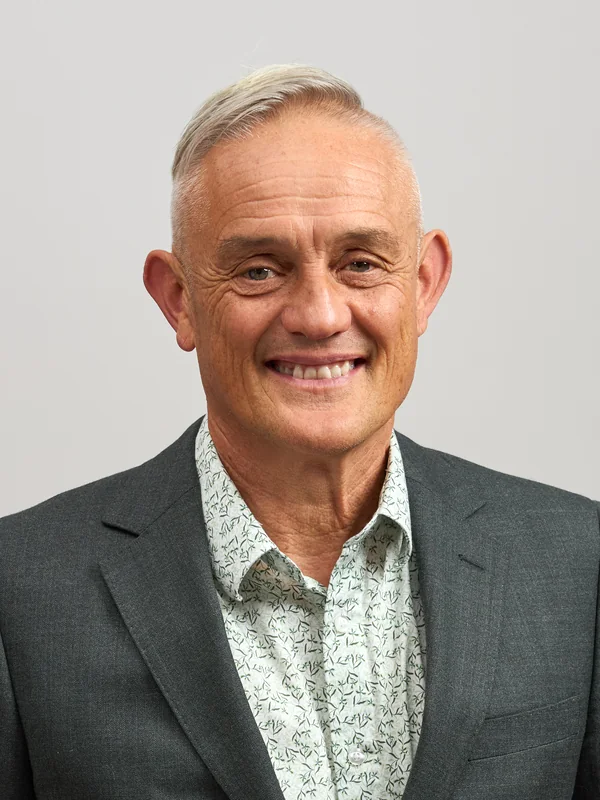
Director
Tauranga
- EmailTo come
- LinkedInTo come
Lee Eagle has been with HPA Group for twenty-three years. It started in Gisborne, at Beetham Village, HPA's oldest development, with bare land being turned into a working village. Before that he was an electromechanical cadet with the Royal New Zealand Navy, then in research and development, then into the retirement sector from an electrical engineering side, designing and building the embedded networks that carried television, fibre, communications and power distribution through a village. At the time that was a novel idea.
He is also the person who can say what HPA used to be. In the beginning it supplied construction crews and nothing else: the people who built the villas, the hospitals and, sometimes, the shared buildings that went with them. Feasibility studies, architectural design and review, planning and council submissions were added over the years that followed, and rolled into a single offer. The full-service model is something HPA assembled, not something it started with.
His argument for HPA keeping a stake in a village afterwards is that it is the only way the knowledge goes back in. Twenty-three years of learning what works is worth nothing if the company leaves once the last villa is signed off. He puts the test for whether a village was done well plainly, and it does not involve a brochure.
You can say yes without any hesitation, categorically say that's a great place to live. No qualifying statement, bang.
Lee Eagle, Director
06
The standard
The tests nobody markets.
A standard is only real if it costs something to meet. These are three of the checks a village has to pass, none of which a resident is ever told about.
- 01
The HPA Kerb
There is a combination of kerb profiles HPA uses in its roading design to ensure level entry is maintained not only through the villa but throughout the village. Each is held to engineering criteria on gradient that the directors describe as punishing, and designed so a wheelchair can cross it.
…there's a thing called the HPA Kerb. It's actually specifically designed to allow wheelchair access and we have quite punishing criteria in regards to engineering specifications.
Lee Eagle, Director
- 02
Where the ambulance goes
When a hospital is designed, one of the checks is whether the ambulance and the hearse can be kept out of sight of the homes that look onto it. Residents who live opposite a hospital entrance otherwise watch their friends leave. It is not always achievable. On at least one site the land was too small and it could not be done.
- 03
The site nobody hears about
Before a village exists there is a study, produced in-house, on demand in the area, the quality of the soils, and the slope of the land. Too much fall makes a site inaccessible for the people who would live on it. If the fundamentals are not there, HPA does not take the site on, and no one outside the business ever learns it was considered.
07
Talk to a director
Walk a site with the person who built it.
Site visits are the highest-conversion thing we do. The directors on this page are the ones who show you around.